
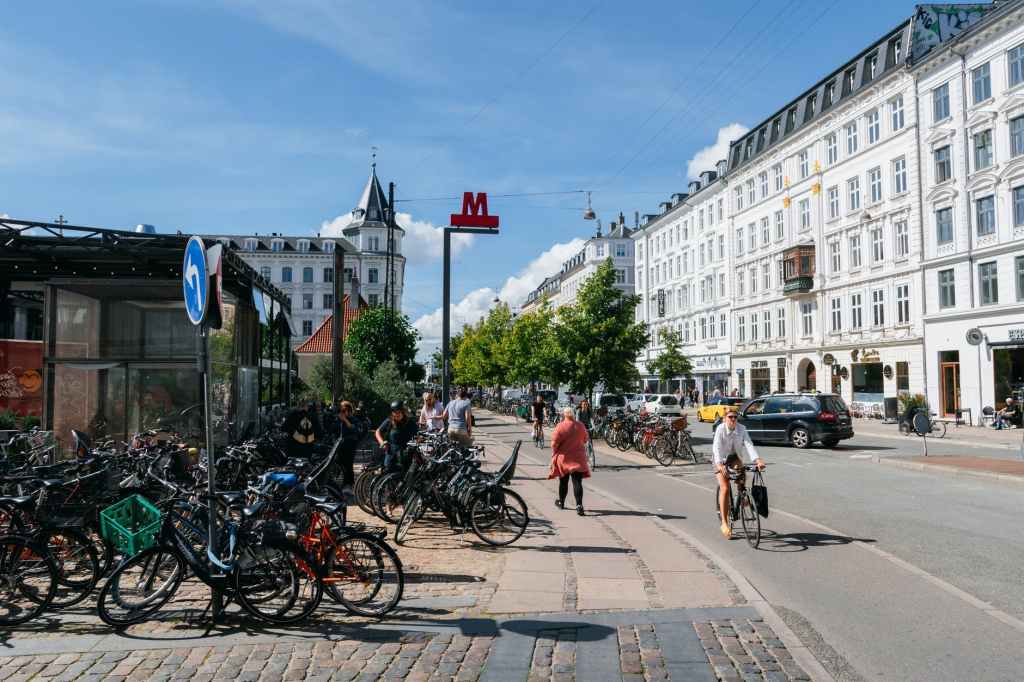
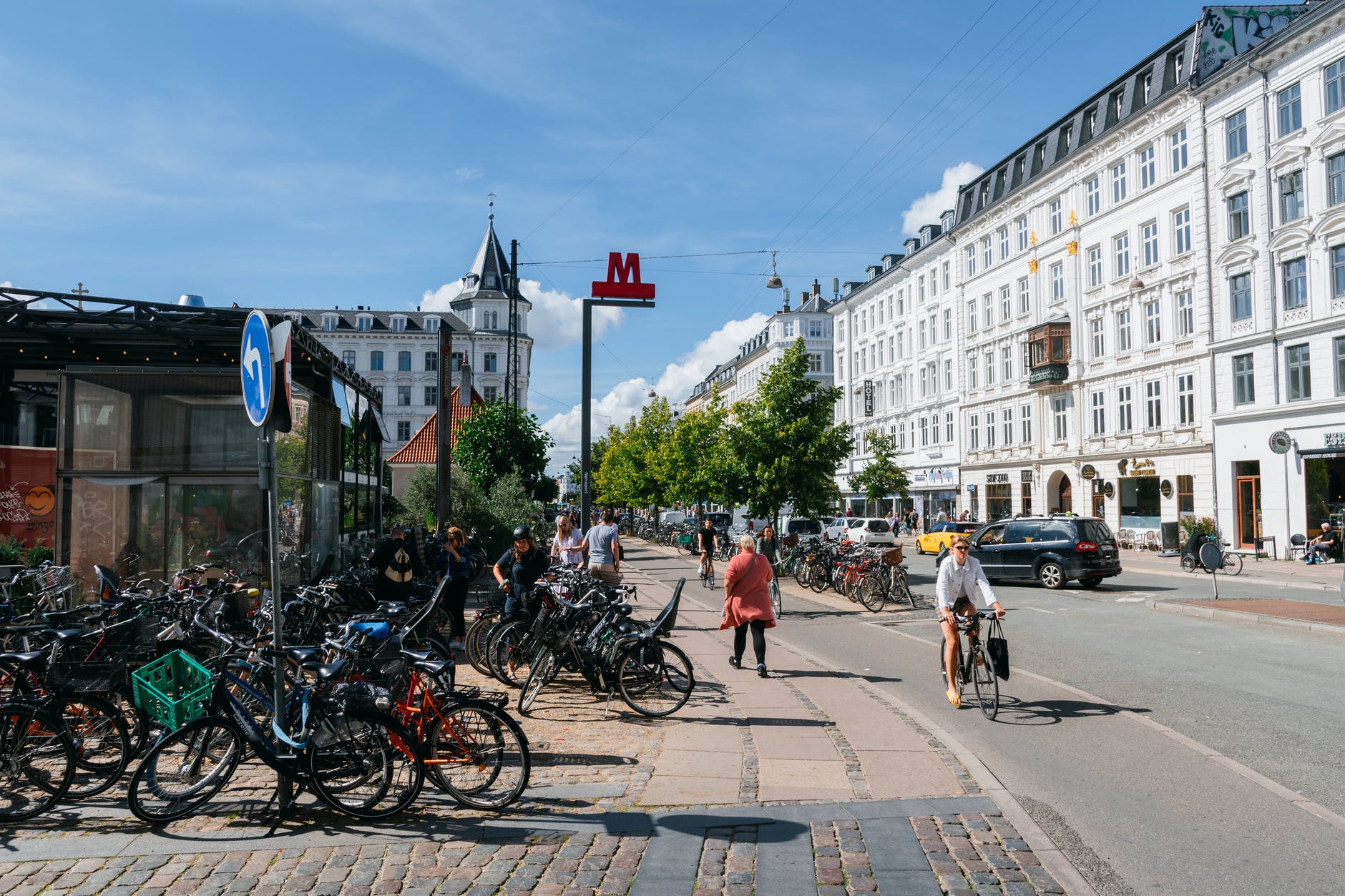
A deep rumbling. Gyrating gears, spinning rubber and metal, grating against gravel, all in unison.
Coming around the corner, a swarm of-—bikers materialize. Headed towards you.
Wha–a bike marathon? You leap out of harm’s way just in time. With jingling bells, the stream of cyclists zip past. Relax. It’s just an exaggeration.
As an unknowing tourist, you probably mistaken the biking lane for the pedestrian lane. In fact, many residents bike as their main form of transport. That’s just one of many unique aspects of Copenhagen.
Besides many, many bikers, Denmark’s capital is characterized by lively public squares, spacious urban parks, and scenic harbors. It’s no wonder the city releases very, very little emissions.
But how did they do it?
Well, in 2009, Copenhagen was actually the 1st city in the world to pledge carbon neutrality by 2025.
At the time, that was incredibly ambitious. But it’s not all tea-party talk, no. In fact, the city adopted an urban development plan back in 1947 to help foster a greener future.
The plan was coined the 5-Finger Plan. It is what is sounds.
Imagine slapping someone really hard across the face. You would probably leave a hand-imprint behind. That’s essentially what the plan looks like—development following the shape of a hand, but NOT the slapping part.
Something like this:
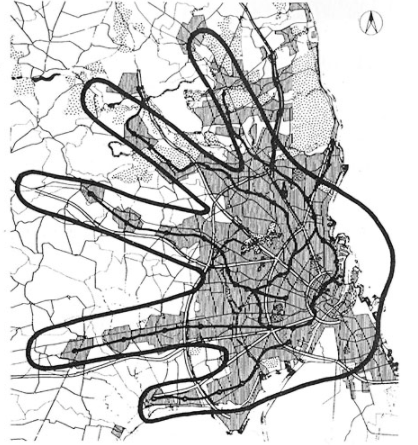
Image accessed via danishdesignreview.com
The city would develop in “slender fingers”, like long strips of urban development. Corridors, to be fancy.
In between the fingers were the green, undeveloped areas. This way, residents could live closer to green spaces, like urban parks and nature reserves.
The plan also focused on improving access to public transport and walkability.
Transit lines would follow along the fingers, extending out from the palm—-or city center. Sort of like the bones in your hands.
Much of the spaces for cars would be converted into pedestrian paths, open-square plazas, and bike lanes.
Today, the city continues to develop and flourish on the 5-finger plan. But this hardly scratches the surface of the city’s successful planning. There’s MUCH more to it.
But hey, now you know there’s no bike marathons—just everyday life in Copenhagen.
Sources:
Cahasan, Paul, and Arielle Clark. “Copenhagen, Denmark.” Copenhagen, https://depts.washington.edu/open2100/Resources/1_OpenSpaceSystems/Open_Space_Systems/copenhagen.pdf.

 The City Planter
Leave a comment