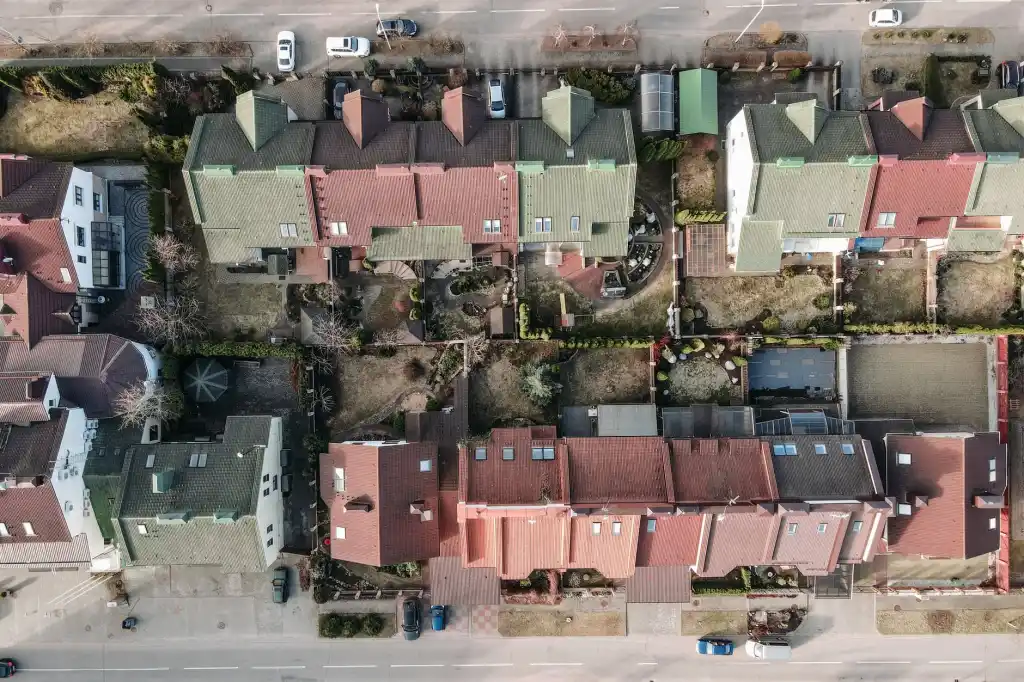
The suburban appeal of big houses, big lawns, and big roads are safely put—exaggerated.
Don’t get me wrong.
It’s nice to have your own space, whether it be sunbathing freely in your backyard or driving in your car. It’s why many people are flocking to the suburbs, but also why we should strictly regulate it.
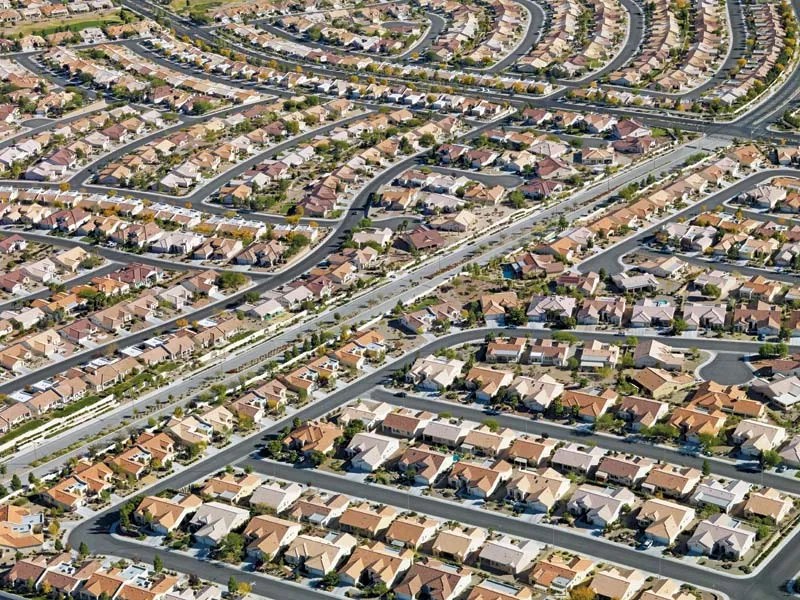
Or else, you end up with this mess:
Credit: Shutterstock.com
The phenomenon of urban sprawl. Essentially, crazy growth. Building low and out. Low density across large areas of land, to be technical.
It’s decentralized, discontinuous, and discombobulating.
Here’s the formula:
urban sprawl = More distance = more roads = more cars = more traffic + car emissions = more air pollution
The very noise and pollution people sought to escape from in the city is just as prevalent in the suburbs. Kinda funny, actually.
Other than the desirability of suburban areas, land-use policies and regulations also play a role. Lands are typically cheaper in rural areas, meaning housing is cheaper as well, but… Haha, there’s always a but.
The affordable housing is offset by higher transportation costs, like getting fuel, car insurance, blah blah blah…
Also in the process of widespread development, areas of natural spaces, and wildlife habitats are cleared out.
Native plants and animals—gone.
In their place are cookie-cutter houses, lawns of monotonous grass, with some random shrubs and trees. It’s actually painful to look at. I can show you again.
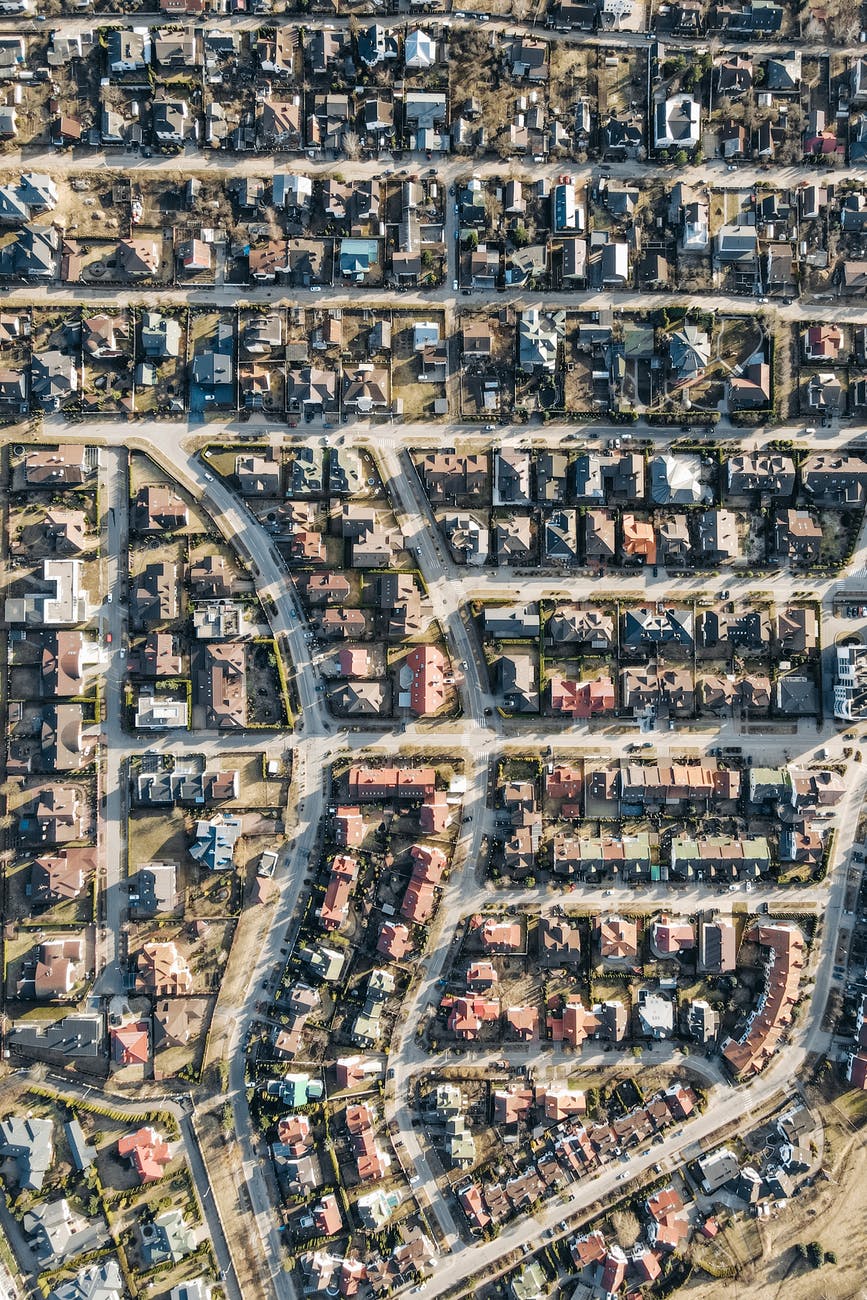
You get the point.
But, the purpose of this post isn’t to diss urban sprawl. It’s how to fight against it.
Say hi to smart-growth.
Rather than focusing on new developments, smart-growth calls for revamping existing ones.
I like to think of it as keeping a tight-knit circle of friends. Like instead of ditching your old friends for new friends, you should maintain and refurbish your relationship with them. (this isn’t personal)
In context, abandoned or older buildings (old friends) can be redeveloped to revitalize the area. It’s much more efficient than buying a piece of land, clearing it out, and building more residential or commercial areas.
Moreover, every level of government should be responsible for examining their policies and implement ones that encourage smart-growth.
This can include adding more bicycle lanes, pedestrian spaces, and charging people for driving—like pricing parking spaces, as annoying as they are.
Which is EXACTLY their intention.
Meanwhile, we can use that money to invest and incentivize other modes of public transport.
As simple as this may sound, this process could end up taking decades. Much unlike urban sprawl.
But we can’t rush smart-growth.
This time, let’s take it slow.
Sources:
Community-planning-zoning. “Land Use in the Wildland-Urban Interface: Urban Sprawl and Smart Growth – Community Planning and Zoning.” Community Planning and Zoning, 26 July 2019, https://community-planning.extension.org/land-use-in-the-wildland-urban-interface-urban-sprawl-and-smart-growth/. Accessed 4 December 2022.
“Rethinking Urban Sprawl:.” OECD, 2018, https://www.oecd.org/environment/tools-evaluation/Policy-Highlights-Rethinking-Urban-Sprawl.pdf. Accessed 4 December 2022.
 The City Planter
Leave a comment